
Motocross The Game Cornering Guide: Ruts and Berms
Learn to corner in Motocross The Game: braking points, body position, rut technique, berms, throttle control and drills for faster, cleaner exits.
Brake in a straight line, release smoothly, lean forward to load the front, and let the bike follow the rut. Get back on the throttle only when the bike is standing up and the rear has grip. Most lap time is lost on entry, not exit, so fix your braking point before you chase more power.
Cornering is where Motocross The Game separates riders who can twist the throttle from riders who can manage a bike. The game's two-body physics model means a corner is not a single steering input; it is a sequence of weight shifts, brake release, rut tracking and throttle application.
The good news is that the sequence is learnable. The bad news is that most riders practise the wrong part of it. They focus on how hard they can accelerate out of the corner, while the real time is lost before the bike ever reaches the apex.
The three phases of a corner
Every corner has an entry, a middle and an exit. The entry sets your speed, the middle sets your line, and the exit sets your drive.
Entry. Brake in a straight line, downshift, and move your weight forward as the bike slows. The front tyre needs load to bite. If you are still braking hard when you turn in, the front will push or the bike will stand up.
Middle. The bike is at its slowest and most leaned. Your job is to keep the front wheel in the rut and the bike balanced. Small inputs only. Look through the corner, not at the rut.
Exit. As the bike stands up, shift your weight back and feed the throttle in. The rear tyre now has the load it needs to drive. If you get on the throttle while the bike is still leaned, the rear will spin or the front will push.
Braking points are the real lap-time lever
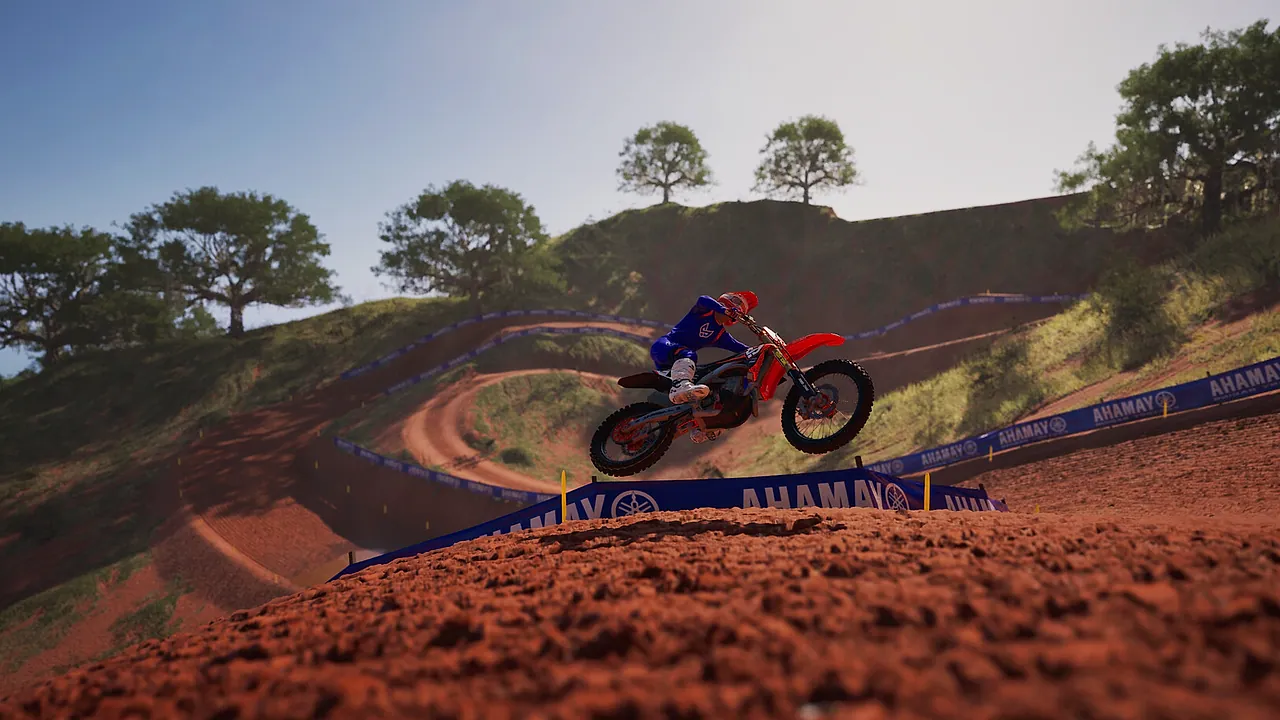
A late braking point feels fast, but it often costs more than it gains. If you brake too late, you miss the rut, run wide, or have to wait for the bike to settle before you can turn. A rider who brakes 2 metres earlier and carries a clean line through the rut will often exit faster.
Find a fixed reference for each braking point: a track marker, a rut, a tree, a change in dirt colour. Brake at the same place for five laps and see whether you are consistent. If you are inconsistent, your reference is too vague.
On hard-pack, you can brake later and harder because the surface is firm. On sand, the bike decelerates more slowly and the front can dig in; brake earlier and smoother. In deep ruts, the front needs to be settled before it enters the rut, so the last part of braking should be gentle.
If you can hear the front tyre skidding as you turn in, you are asking the front to do two jobs at once. Release the brake smoothly before the rut.
Rut technique
Ruts are the defining feature of tracks such as Midsummer Carnage. A rut is a groove that the bike follows; fighting it is slower than trusting it.
Enter the rut with the front wheel pointed where the rut goes, not where you want to go. Lean forward to put weight on the front, and keep your body centred over the bike. Let the rut guide the front wheel. If you try to steer out, the front will climb the side and you will lose the line.
Use the rear brake gently to control your speed without upsetting the front. Use the throttle to keep the rear driving, but do not spin the rear; a spinning rear will push the front out of the rut.
If you are struggling to stay in the rut, check three things in order: body position, tyre pressure, suspension. A front that is too stiff or a pressure that is too high will make the bike climb out.
Berms and flat corners
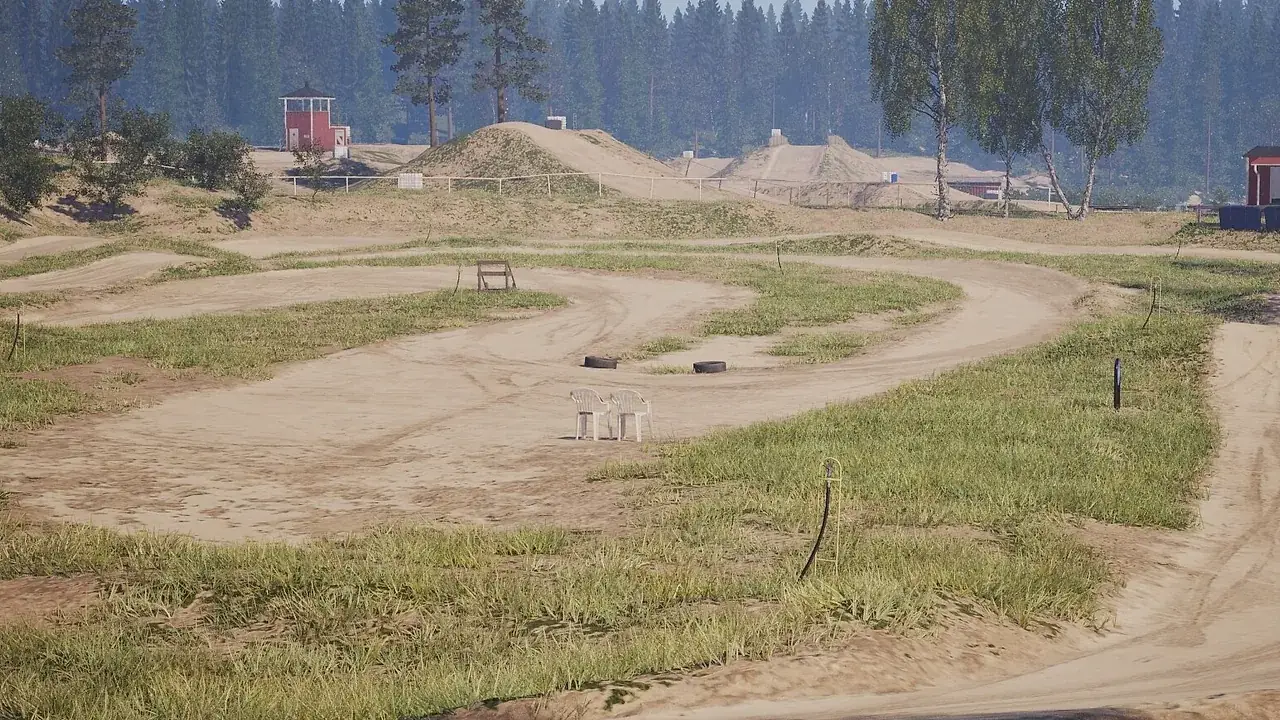
A berm is a banked corner that gives you a wall to lean on. The technique is similar to a rut, but the bike can carry more speed because the bank supports it. Enter with the front wheel against the base of the berm, lean the bike into the bank and get on the throttle earlier.
A flat corner has no bank and no rut. It is the hardest type. You need to create your own turning force with body position and throttle. Brake earlier, turn with a smooth arc and be patient with the throttle. On hard-pack, a flat corner rewards a precise front-end and a clean line.
Body position through the corner
Forward on entry, centred in the rut, back on exit. Stand up when the ground is rough, sit when you need to lower the centre of gravity. Keep your elbows up and your head over the bars. Look through the corner.
A common mistake is to sit too early. If you sit before the bike is settled, your body becomes a rigid link and the suspension cannot absorb the track. Stay standing until the bike is pointed at the exit, then sit and drive.
Throttle control on exit
The exit is where the 450F and 250F feel most different. The 450F can pull from low revs, but it can also spin the rear. The 250F needs revs and clutch control, but it is less likely to break traction.
Open the throttle as the bike stands up. If the rear spins, you are too early or too aggressive. If the engine bogs, you are too high in the gear or too low in the revs. The correct amount keeps the rear driving without spinning.
On a rutted exit, keep the front in the rut until the bike is upright. If you drift out early, you lose the drive you built.
Line choice
The fastest line is not always the shortest. A longer line that lets you carry speed and get on the throttle earlier can be faster than a tight line that forces you to slow down.
Look for a line that connects the entry, the rut and the exit. In a series of corners, the exit of one corner is the entry of the next. A good line through the first corner sets up the second.
Walk the track in your mind before you ride. Identify the ruts, the braking markers and the places where the surface changes. Then ride five laps at 70 percent and see whether your plan survives contact with the track.
Four cornering drills
The braking drill. Pick one corner and brake at the same marker for ten laps. Count how many times you hit the rut. Do not chase lap time.
The rut drill. Ride the same rut ten times at the same speed. If the front climbs out, change one thing: body position, pressure or suspension.
The exit drill. Ride a corner at 80 percent and focus only on getting on the throttle smoothly. Ignore the entry. Feel the rear hook up.
The vision drill. Look at the exit of the corner, not the front wheel. This feels unnatural at first, but it will smooth your line.
Common cornering mistakes
Braking too late. You miss the rut and lose more time than you gained.
Turning while still hard on the front brake. The front has no grip left to turn.
Sitting too early. The bike cannot absorb the track and the rear loses drive.
Getting on the throttle while leaned. The rear spins and the front pushes.
Fighting the rut. Let the bike follow the groove.
Looking at the front wheel. Look through the corner.
For the next step, the suspension setup guide→ covers the related inputs in more detail.
FAQ
How do I corner faster in Motocross The Game? Fix your entry first. Brake earlier, release smoothly and get the front into the rut. Most riders gain more from a clean entry than from more throttle on exit.
Should I use the rear brake in corners? A gentle rear brake can help the bike rotate and control speed without upsetting the front. Do not lock it.
Why does the front keep climbing out of ruts? Body position, tyre pressure and suspension are the usual causes. Lean forward, check pressure and soften the front if it is too stiff.
Is it faster to sit or stand in a corner? Stand through the entry and the rough part, sit when the bike is settled and you need to drive. The best riders switch between the two.
Sources
- Motocross The Game on Steam ↗
- Official Motocross The Game site ↗
- Official time attack leaderboards ↗
Official source: Steam store description and official about page, checked November 10, 2026. Technique guidance is based on motocross fundamentals and the game's two-body physics model.